Dear Clients, Colleagues, Associates, Friends and Family,
Even though I have been away last month, taking some much-needed vacation time with family, I almost didn’t want to write to you this month. (Heck, I didn’t want to come back at all ...). Not because I had nothing to say, but because I felt weary of saying the same thing over and over. How many times can we start a letter with “these are difficult days”? How many times can we acknowledge the heartbreak of wars, the despair of politics, the climate disasters, the endless headlines? Even that refrain has become its own kind of exhaustion.
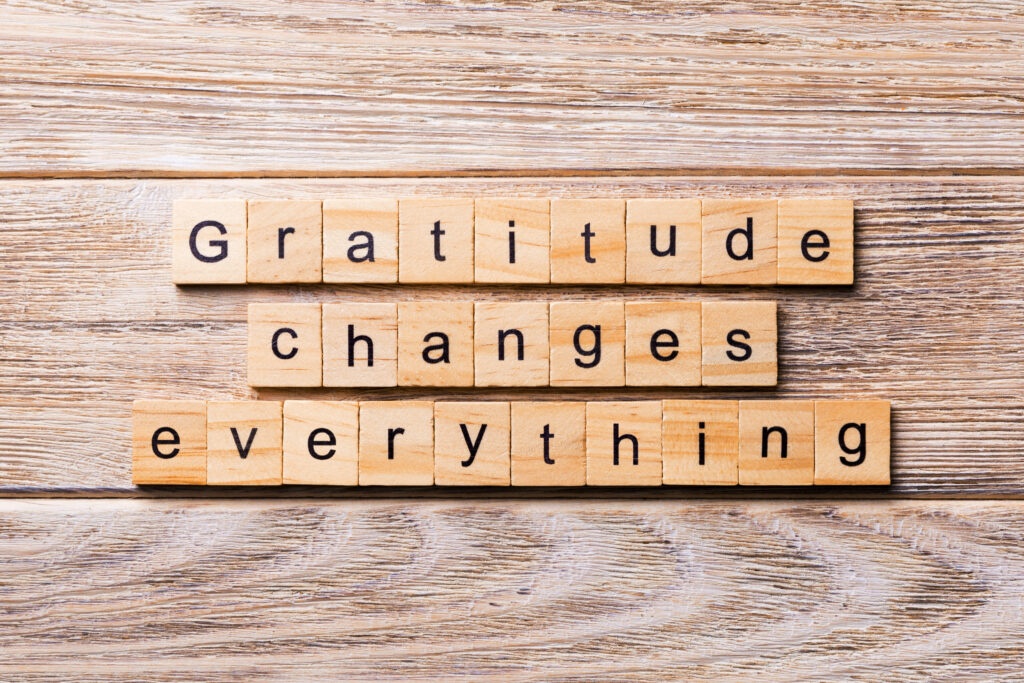
And yet—that in itself is the reminder: despair is sticky. It pulls us deeper and deeper if we let it. Which is precisely why we need to return to the basics, over and over again. Why we go back, like thirsty travelers, to the most elemental of wells: gratitude. Not as a pretty word on a card, but as a daily lifeline, a practice that keeps us human when the world tries to strip that humanity away.
This morning, I felt grateful to wake up easily at 4:15am to go to the gym thanks to jet lag. I was happy for my kettle which boils water in seconds, allowing me to get out the door in time for my 5am swim start. I appreciated the delicious Chai Tea which warms and wakes me up on the way when everything is dark and cold.
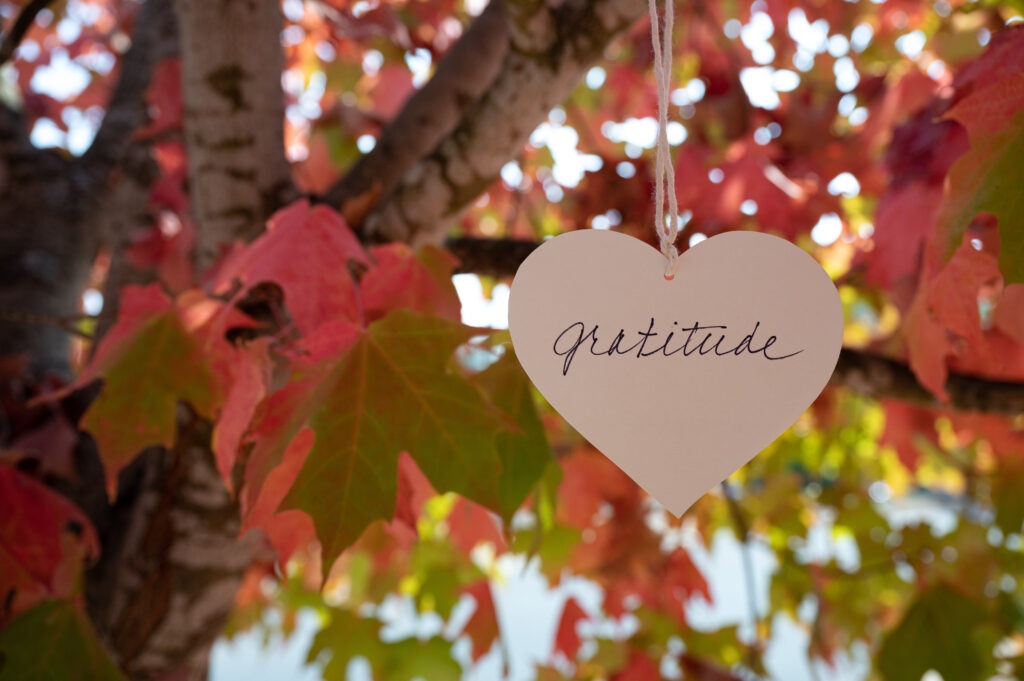
Gratitude is stubborn. It refuses to disappear, even when cynicism sneers at it. It insists on being noticed:
The September light spilling gold across the table, the friend who remembered to call, the way your breath quietly keeps you alive without asking anything in return. It is so simple, so ordinary, that we overlook it. And yet—it is powerful medicine.
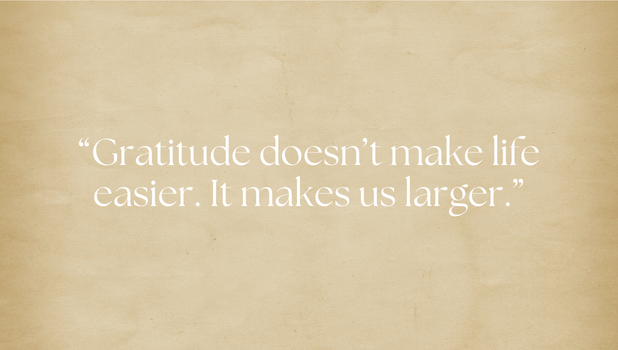
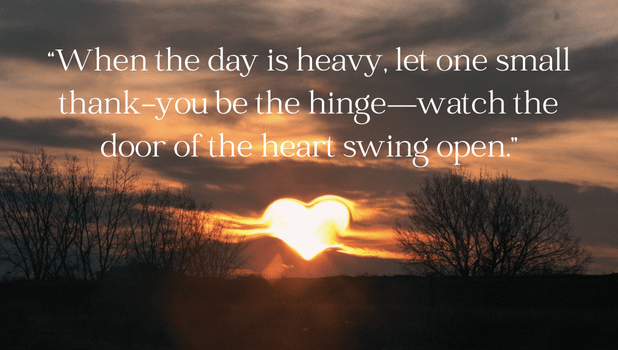
From an Adlerian lens, gratitude is social interest in action: it reconnects us with people, place, and purpose. By noticing what is going well and expressing appreciation toward others, we show them that what they do, and how we are together, matters. In Positive Psychology, it’s one of the most studied, teachable, doable practices for well-being. In my coaching work I’ve seen it shift a conversation, a marriage, a team, a heartbeat. Gratitude doesn’t deny pain; it creates space around pain so we can breathe again and respond with courage. As one of my mentors used to say:
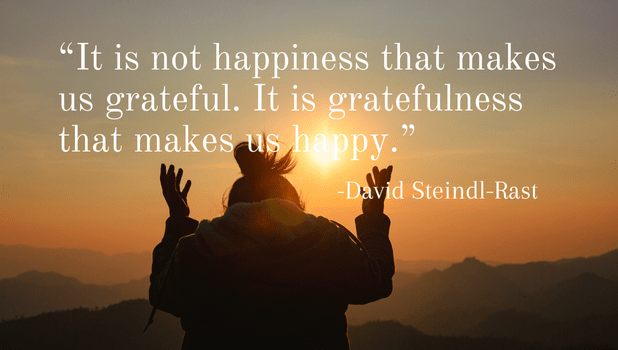
The researchers in Positive Psychology have proven what our grandmothers always knew: gratitude doesn’t just make us feel better in the moment. It rewires our brains. It softens the stress response, steadies the nervous system, strengthens resilience, even helps us sleep. The science only confirms what we already experience: when we pause long enough to whisper “thank you,” something shifts inside. The air clears. The shoulders drop. The heart grows just a fraction bigger.
When I landed at Dulles the other day after 21 grueling travel hours, and my luggage had missed its connection (along with dozens of others’), I could not believe how gracious the baggage claim service people were: everyone is coming at them at once, aggravated, tired, aggressive, impatient. And they, with a kind smile and immense patience, take their time to address each person without showing any resentment. They make one feel that they understand our frustration and care about our problems. They totally ignore people’s unfriendliness and solve one problem after the other as if it was the most natural thing in the world.
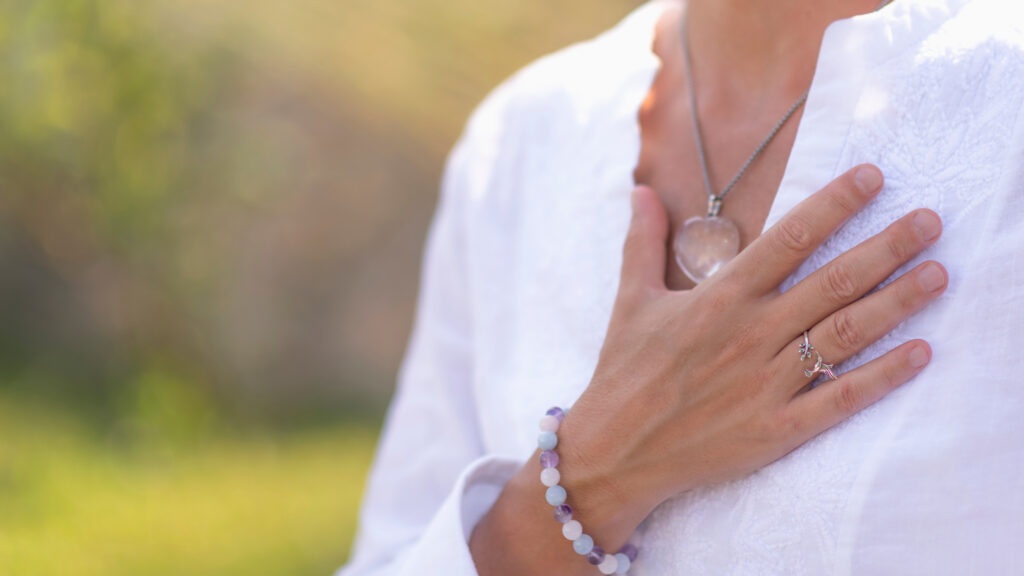
Gratefulness – Woman expressing gratitude with hands. Close up image of female hands in prayer position outdoor. Self-care practice for wellbeing
Hand on heart. Breath in, breath out. To let the words of thanks echo through your body until they land somewhere deeper than thought. That is the real Vitamin G.
So let’s practice. Right here, right now. Close your eyes for a moment. Name one thing—just one—for which you are grateful today. Something very specific. Then breathe with it. Let it soak in. Feel how it shifts you, even slightly.
This isn’t about ignoring the pain of the world. Gratitude does not erase grief, or injustice, or fear. It simply keeps us from drowning in them. It is the raft we cling to so we can keep showing up—with steadier nerves, clearer vision, and yes, more courage to do the hard things the world still needs from us.
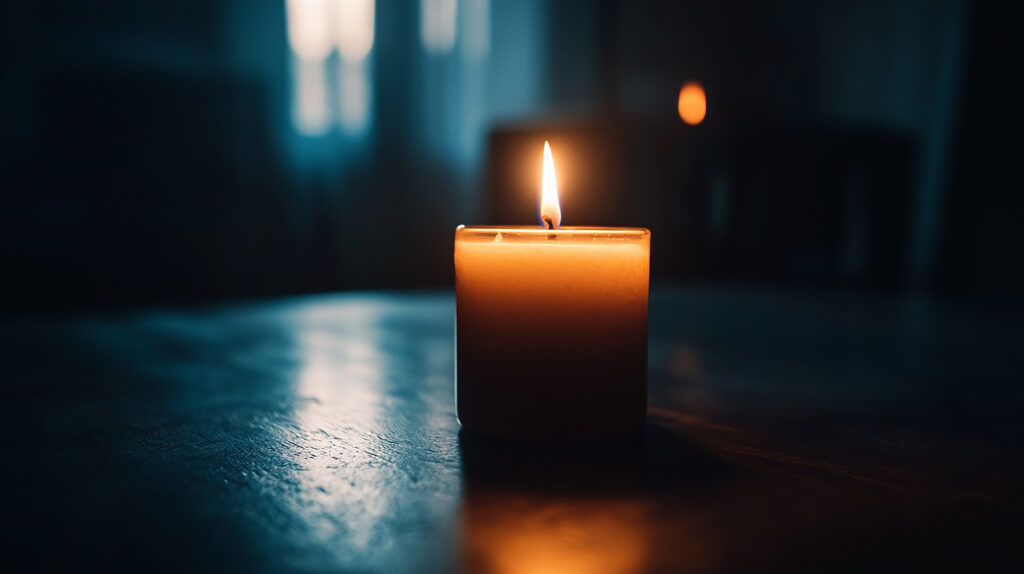
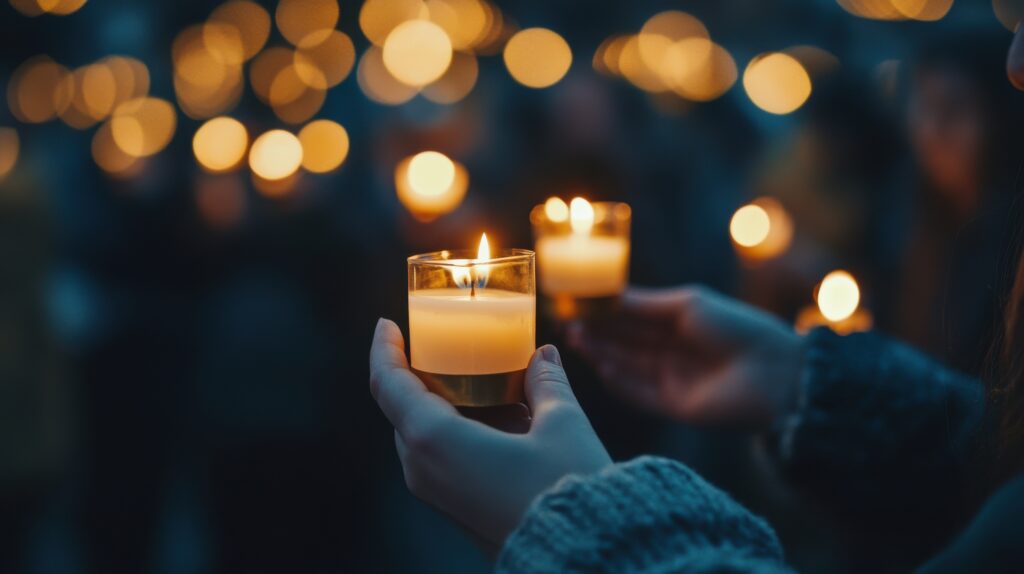
I often imagine gratitude as a candle. Small, flickering, almost laughably fragile—and yet it has the power to push back against the vast darkness of a room. I often imagine gratitude as a candle. Small, flickering, almost laughably fragile—and yet it has the power to push back against the vast darkness of a room.
When we practice together, the light multiplies. One flame becomes many.
Practicing Gratitude in Difficult Times
I want to share with you a few gentle doorways back into gratitude. These aren’t tasks on a checklist; think of them as small rituals, scattered across the day, that keep us tethered to what is still good and possible.
Morning — A Drop of Awe. Before you reach for news or email, notice one ordinary miracle: the steam rising from your mug, the ridiculous loyalty of your dog, the way the light leans across the floorboards. Whisper, “thank you for...” and breathe it in.
Midday — One Generous Minute. Offer a specific appreciation. A quick text or voice-note: “When you checked in with me today, I felt less alone. Thank you.” Precision is love.
Evening — Three Good Things. Write down three things that went right today and why. Not vague categories, but concrete snapshots:
“A stranger held the door when my hands were full—reminded me kindness is still out there.”
“I keep my boundary and said “no”. Proud of myself!”
“The sky went apricot tonight … like a tiny cathedral. Wow."
And then pause: hand on heart, breathe, feel.
Once a week, write a Gratitude Letter to someone you’ve never properly thanked. Send it—or don’t. The act itself matters.
A Five-Minute Rescue Practice
When life feels unbearable, try this:
Name one thing that is hard right now. (Yes, start there.)
Name one thing that is still good inside that hard thing: a helper, a skill, a patch of beauty.
Breathe five counts in, five counts out.
Hand to heart, whisper, “This, too.”
Choose one small kind action you will take within the next day.
That’s Radical Acceptance paired with Radical Joy—two wings of the same bird.
Practicing Together
Gratitude can also be shared. Families, friends, and teams can practice side by side:
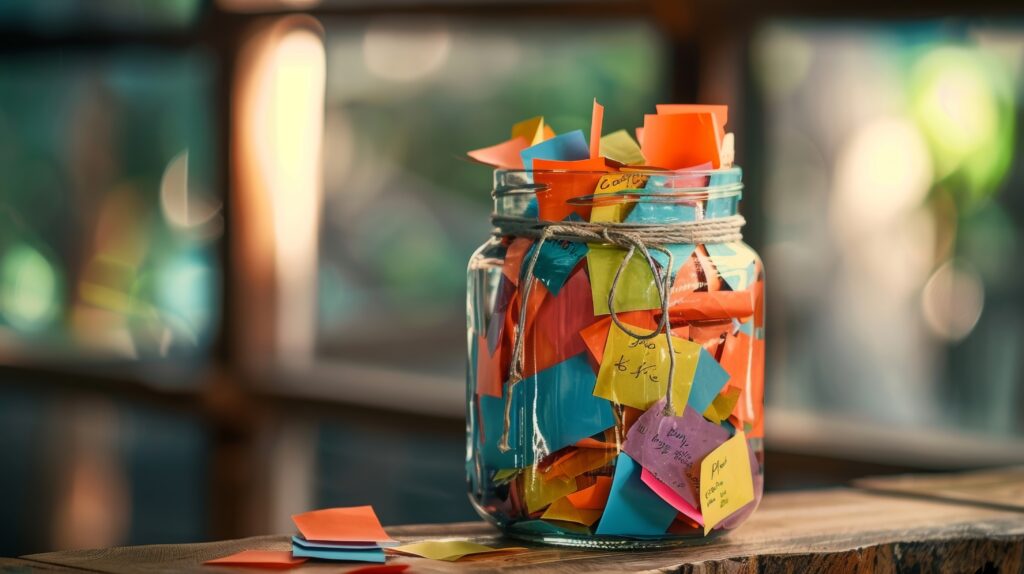
The Gratitude Jar 2.0.
Keep a bowl with colorful slips of paper on the table. All week, add specifics. Read them aloud on Sunday. With work teams, begin meetings with one brief appreciation: “Thank you for ___because ___.” Small, true, frequent.
Savor & Save.
Take one photo a day of something you’re grateful for. Collect them in a shared album called “Vitamin G.” On the days when everything feels bleak, scroll it like medicine.
Or ... just step outside and listen to the crickets who are still, against all odds, singing.
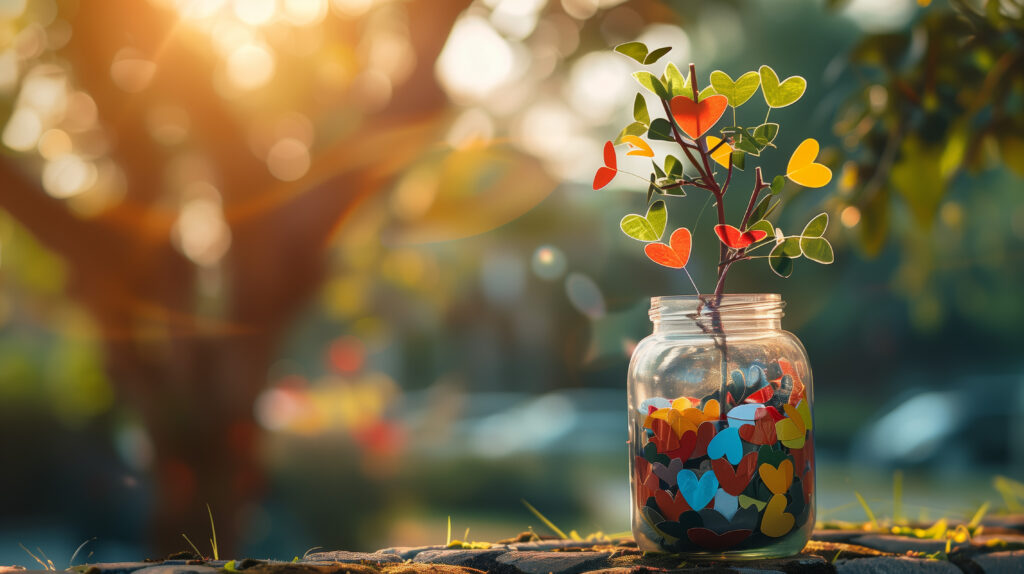
gratitude jar with notes of appreciation, tree with leaves expressing thankfulness, board with messages from community. cultivate joy, abundance, positive relationships in daily life.
Dear ones, these are difficult days. We are tired even of saying so. And still, we return to the practice. We take our dose of Vitamin G. We do it not to escape reality, but to restore our capacity to face it. Gratitude is not weakness. It is resistance. It is repair.
With deep appreciation for YOU, my friends, clients, partners, readers … who make it all worth it.
Pascale
The Challenge Coach
P.S. If you’d like a soundtrack for your walks this month, here’s a little Vitamin G playlist:
Thank You — Dido
Grateful — Rita Ora
Simple Gifts — Yo-Yo Ma & Kathryn Stott (watch it too!)
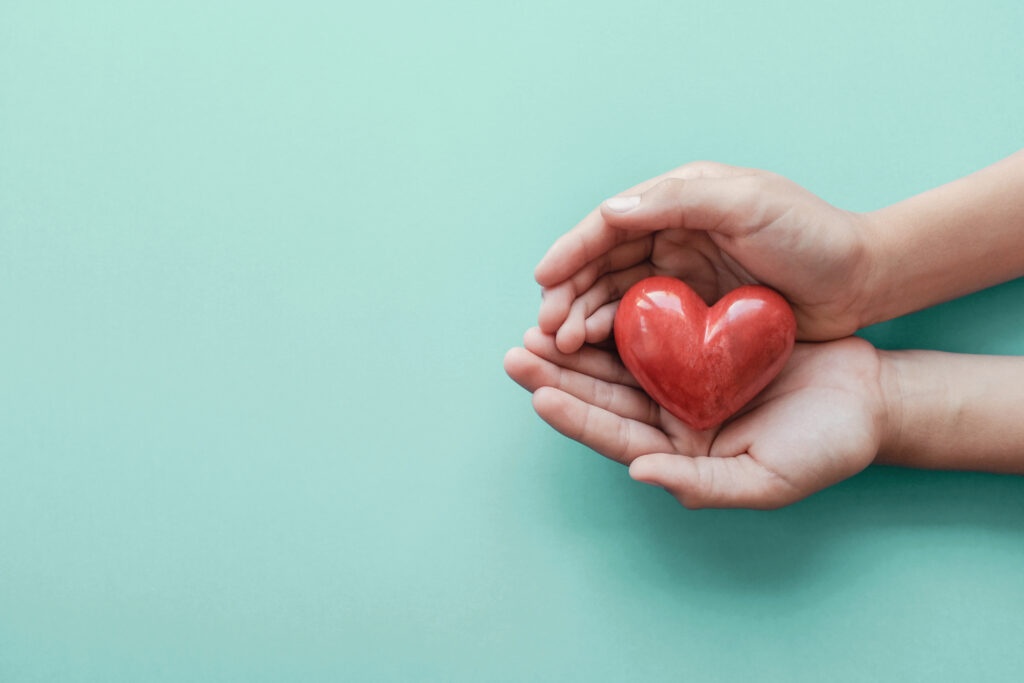
hands holding red heart on blue background, health care, love, organ donation, family insurance and CSR concept, world heart day, world health day
An Invitation:
The 7-Day Vitamin G Challenge
If you’d like to go beyond reading and actually live this practice together, I’m hosting a free 7-day Gratitude Challenge starting next week.
Each morning you’ll receive a short prompt—just a few lines—to guide your attention toward what is already here, already nourishing.
We’ll share simple rituals: a drop of awe, one generous minute, three good things.
By the end of the week, you’ll have built a pocket-sized gratitude practice you can carry anywhere.
It’s not about perfection. It’s about community, about experimenting, about noticing that when we practice together, the light multiplies.