
“There’s something green in the soup.”
This simple sentence was the prompt we were given last week in a communications class I attended at ICASSI (International Committee of Adlerian Summer Schools and Institutes). We were asked to share how we each interpreted the phrase—what we made up in our minds when we heard it.
Here’s what people offered:
- “Yes! It’s green peas.”
- “Do you think that’s a good thing or a bad thing?”
- “I’d taste it to figure out what the green thing is.”
- “I’d play a guessing game with others first!”
- “I’d probably not eat the soup.”
This delighted me, because I often do a similar exercise in intercultural trainings I lead for global companies. I ask two volunteers to visualize a frog—really see it in detail as if they were about to draw it, then have them describe their frogs to the group. Inevitably, they’re nothing alike. One person might imagine a cartoonish bright green frog on a lily pad with googly eyes; the other pictures a bumpy, brown-green, damp creature on the edge of a pond.


Same word. Same species. Different mental image.
These simple exercises highlight something profound: even when we hear the exact same thing, we experience it through our own individual filters.
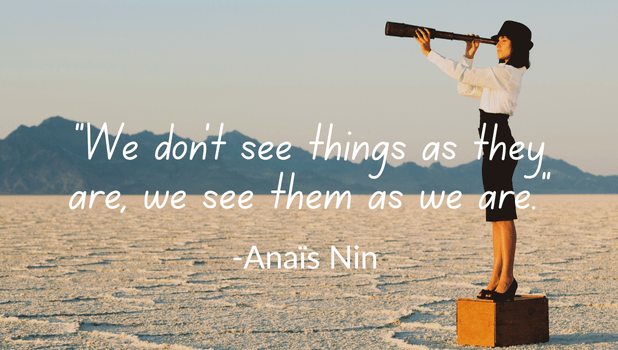
As Anaïs Nin once wrote:
Why does this matter?
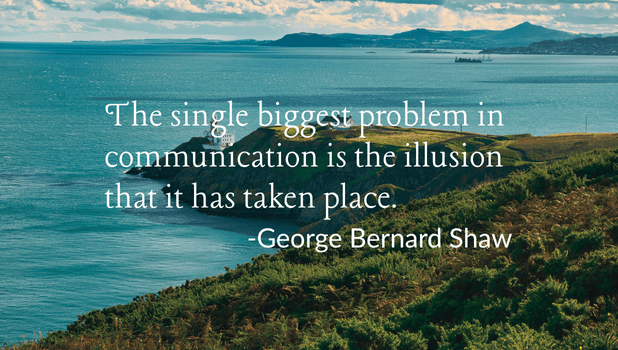
Because this—this very gap between words and interpretation—is the root of so much human miscommunication and conflict. We assume that if we speak the same language, we mean the same things. But we don’t. Even the simplest words come filtered through our personal histories, emotions, cultures, assumptions, and private logic. This is the invisible root of miscommunication: we think we’re speaking the same language, but we aren’t actually saying—or hearing—the same things.
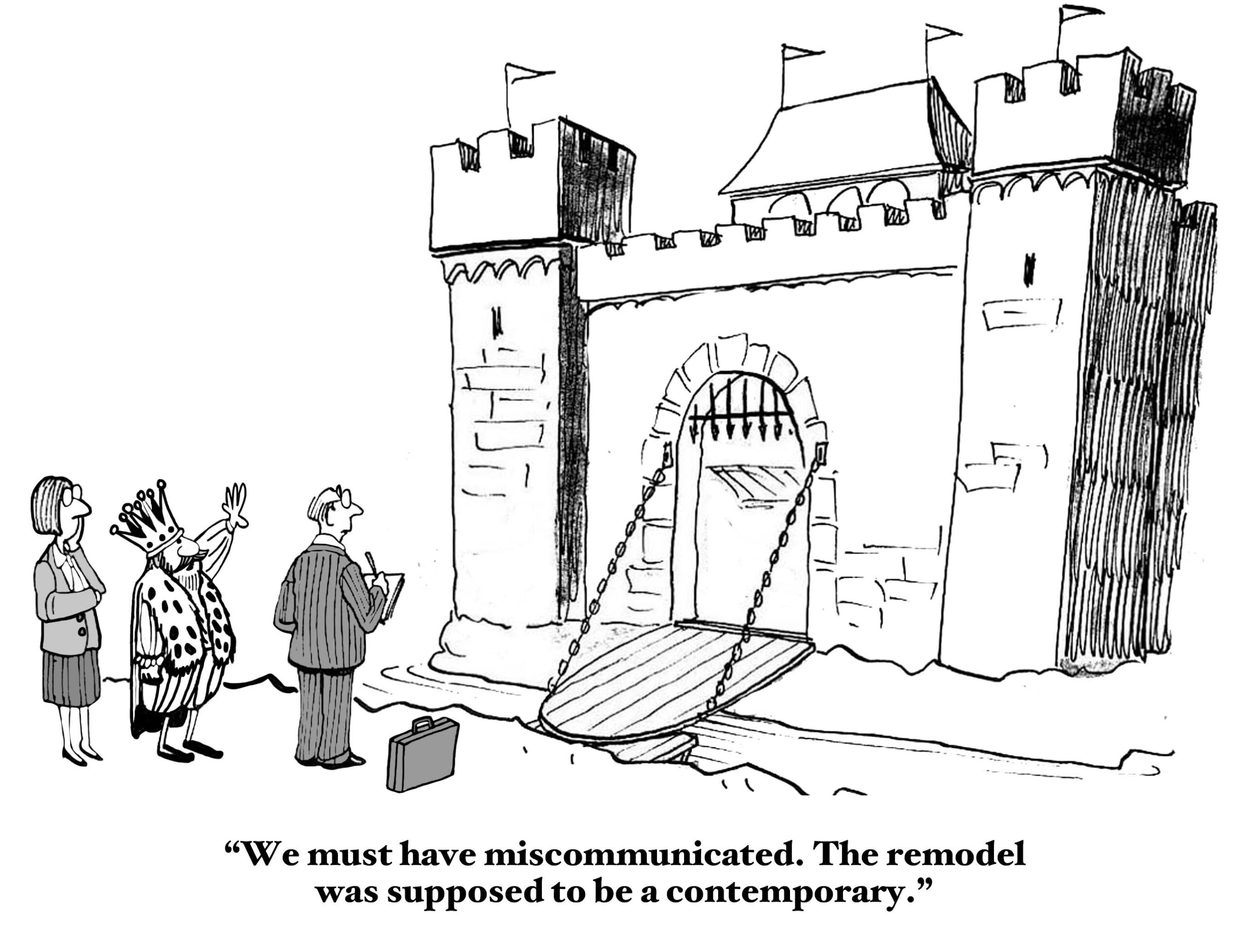
Let me show you how easily this plays out in daily life. Here’s a real-life example from just a few nights ago between my partner Michael and I:
[Mini Scene]
He was making a beautiful dinner and, after slaving away in a hot kitchen for hours, asked me if I’d mind making the salad. I was in my office, catching up on a mountain of emails after being away at a conference. I told him, “Let me just finish this—I’ll be there in a few minutes to make the salad.”
Five minutes later, he walks into my office: “Dinner’s ready. Are you coming?”
Now I’m miffed. I hadn’t finished my emails yet, and I really wanted to close the computer before dinner so I could be fully present. I was also a little disappointed: I had agreed to contribute the salad, and he’d made it anyway—so I felt like I missed my one chance to participate. But from his perspective, dinner was hot and ready, and he was eager to eat. He thought I was taking too long and didn’t realize I wanted to finish work first.
COMMUNICATION BREAKDOWN!
We were talking from different rooms, had different timelines in mind, and made assumptions without clarifying them. Classic case.
The good news? We’re both seasoned communicators and longtime partners. We’ve had lots of practice. So we talked it through, explained what had happened from our respective angles, and moved on with kindness and mutual respect.
But many people—many of my clients, for instance—don’t have those skills. And a small misunderstanding like this can quickly spiral into defensiveness, hurt feelings, and full-blown conflict.
So how do we avoid these unnecessary collisions?

Step One: Mindfulness
Start by remembering that each of us sees the world differently. That simple awareness—my frog isn’t your frog—is the foundation. You can’t assume your meaning was received the way you intended it. And someone else’s reaction may come from an entirely different story than the one you’re telling yourself.
But mindfulness alone isn’t enough. We also need acceptance: that other people’s interpretations are as valid as ours. That there is no universal “Truth” with a capital T—only personal truths.
Let’s bring this to life with another example:
Imagine it’s Monday, and it rained.
Scientists could verify this with data—water samples, radar, all of it. But at the end of the day, if you ask four people how the rain affected them, here’s what you might hear:
- “It was horrible. I hate when it rains on Monday. The commute was miserable.”
- “Thank goodness it FINALLY rained. My garden needed it. I hope it rains all week!”
- “Wait… it rained today?”
- “That wasn’t real rain—barely enough to wash my car.”
So who’s right?
What’s “true”?
They all are.
The truth isn’t the event. It’s the meaning we make of it. And if we forget that, we’re bound to misunderstand each other—again and again.
Step Two: Clarify, Don’t Assume
Once we pause and acknowledge the potential for misunderstanding, the next step is to clarify. Ask questions. Reflect back what you heard. Don’t fill in the blanks with your assumptions.
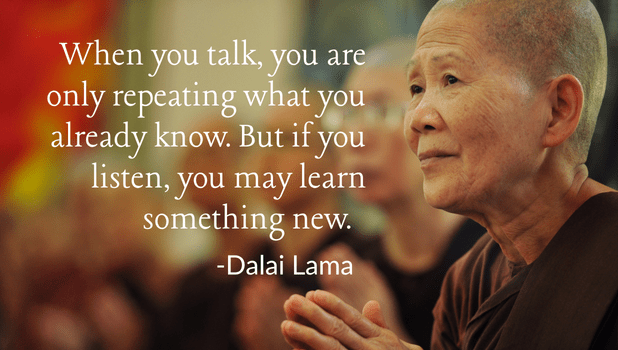
In coaching, I do this constantly. A client shares something, and rather than rush to interpret it through my lens, I ask: “When you say that, what exactly do you mean?” or “Can you tell me more about that part?” It helps me understand their frog, not project mine.
One Practical Tool: IMAGO Dialogue
One of my favorite tools for clear, respectful communication—especially when emotions run high—is the IMAGO Dialogue.
Developed by Harville Hendrix and Helen LaKelly Hunt, IMAGO Dialogue is a structured process that builds connection through understanding, not debate. It has three simple steps:
- Mirroring – Repeat back what you heard the other person say. No judgment, just the message as you received it: “So what I’m hearing is…”
- Validation – Acknowledge that their perspective makes sense, even if you don’t agree: “That makes sense to me because…”
- Empathy – Reflect the emotion you imagine they’re feeling: “I can imagine that felt frustrating/lonely/disappointing…”
This tool is used in couples therapy, but it’s just as useful in work teams, friendships, and families. I’ve used it in coaching sessions, board retreats, and heated household negotiations. It changes the tone of the conversation from “me versus you” to “let’s understand each other.”
If you want more on how to use IMAGO in your own life, contact me—I’d be happy to send a handout or walk you through it.
In today’s world—so full of polarization, assumption, and reactive behavior—mindful communication isn’t just a life skill. It’s a peace practice.
Miscommunication is an invisible wedge. It breeds conflict where there could be compassion, and division where there could be connection.
We can do better. We can pause. We can listen. We can ask.
We can choose respect, tolerance, and curiosity.
We can make space for another person’s frog.
And that, my friends, is how we build peace—one small, green thing in the soup at a time.
Want to practice?
This fall, I’m considering offering a workshop or small group coaching series on Mindful Communication for Real Life—an experiential, practical, and (yes!) fun space to explore how we speak, how we listen, and how we repair.
If you’re interested, just let me know. I’ll keep you in the loop and give you first dibs when registration opens.
Until then: ask questions, slow down, and stay curious.
And … Say What You Need to Say!!
Warmly,


CRANKY, SNAPPY AND TOTALLY FRIED?
Upcoming Webinar — Special Reader Offer!
Holding it Together (Without Falling Apart)
Stress Relief for Tender-Hearted Humans
⏰Tuesday, October 7 @ 10am ET | 90 minutes
Feeling overwhelmed? Snapping at the people you love? You’re not alone—and you’re not broken. You’re just stressed. Let’s reset, together.
In this lively, interactive webinar, you’ll learn what stress does to your brain and body—and walk away with real tools to feel calmer, clearer, and more you again.
- Tools for emotional resilience
- In-the-moment self-regulation strategies
- A nervous system refresh—engaging, creative, uplifting
🎟️ I’d love to invite you—my newsletter readers—to this live masterclass at a special rate. You can join for $150 (normally $300) with the code KIND50.
Want to bring a friend? Even better. Use KIND60TOGETHER when registering two people, and it’s just $120 each—that’s 60% off for both of you. It’s my way of saying thanks for being here.
Click below to get the full details and reserve your spot:
SUBSCRIBE TO THE CHALLENGE COACH NEWSLETTER
Are you ready to receive exclusive insights, tips, and strategies to help you overcome your challenges and achieve your goals? Then sign up for The Challenge Coach's Newsletter today!
As a subscriber, you'll get access to:
- Actionable tips and advice from The Challenge Coach
- Inspiring stories
- Discounts for coaching programs and products
... and much more!
Don't miss out on this incredible opportunity to stay connected with The Challenge Coach and take your personal growth to the next level. Sign up now and join our community of driven, determined, and empowered individuals.