

It’s often during life’s big transitions—retirement, a major move, a loss, or even a brush with death—that a truth suddenly rises up and confronts us. We think: There’s something I haven’t done. Something I haven’t said. And what if I never do?
The most vividly painful experience I’ve had with things left unsaid was with my late husband, Steve. Many of you knew him or have heard of him through these newsletters. Steve died 13 years ago after a long and difficult battle with cancer. He was a ferocious, stoic fighter all his life—and also deeply goal- and results-oriented. So when cancer came, he approached it like a business project: define the goal (survival), build a plan, follow the steps. Over and over again. Every time things veered off course, he revised the plan and kept going. But the goal never changed. For Steve, there was only one acceptable outcome: living.
Which meant that we never made space for any other possibility.
We never discussed—until just a few days before he died, when he could barely speak—what should happen if the plan failed. I respected his way of facing the illness. But it left me with an enormous burden: a heavy pile of profoundly important things left unsaid. And I carried that weight with me for many years.
Leaving things undone or unsaid can create an invisible weight; a weight that we carry around like a ton of bricks and which takes a significant toll overtime. And even though they are probably the heaviest of all - because they are irreversible, it’s not always just about things we didn’t say before it’s too late.
As a coach, I see this often—especially with younger clients—who struggle to speak their truth. They fear conflict, so they avoid having hard conversations with the people in their lives. But the cost of avoidance is steep: knots in the belly, lingering grudges, relationships that quietly deteriorate… or worse, persist in harm. The truth is: it takes courage to have difficult conversations. Especially at work. Especially with your boss or leadership. But mustering the courage to speak up builds a vital muscle; a muscle that gives you access to peace, dignity, integrity--a spine that stands tall in freedom.
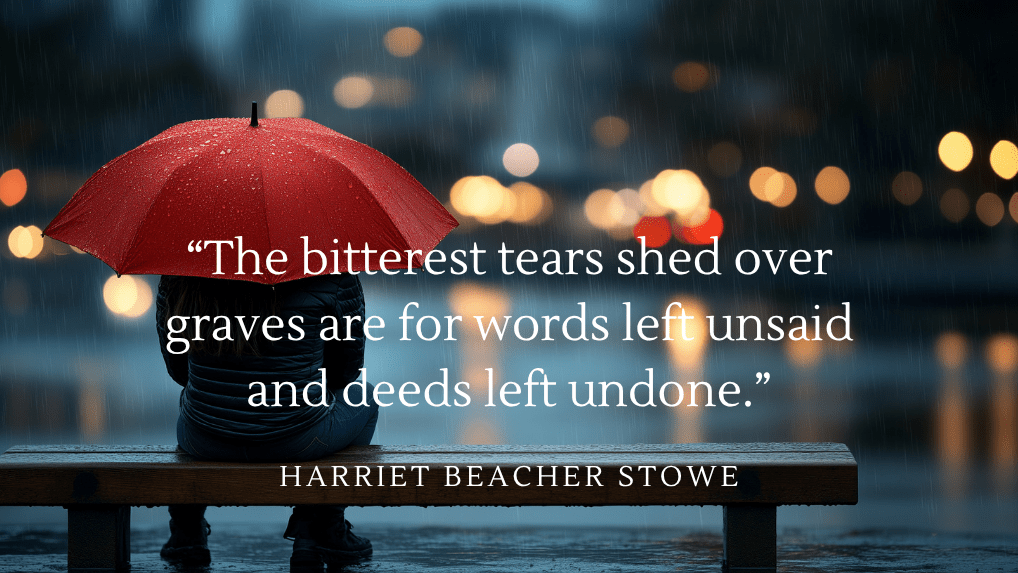
Here are some of stories of courage that I’ve witnessed:
When Helen’s father passed away after a long illness, she began to realize how short and precious life is. As a result, she decided that she was no longer going to keep silent about the toxic relationship that she’d been living in with her partner. After years of carrying around that invisible weight, Helen told her partner that she was leaving him.
John retired after decades of purposeful work. But it wasn’t long before he began to realize that retirement also meant that many of the most important connections in his life had gone silent. As he was no longer surrounded by his co-worker friends, he began thinking about all of the important people in his life that he had lost touch with over the years. He’d often thought about connecting with them again, but the years of silence made him feel awkward about even trying. Retirement helped him find the strength to give it a try. He began reaching out to old friends and the invisible weight that had been holding him back fell away. His friends responded. And now retirement doesn’t feel quite so lonely for John.

Rita and her best friend Olli had a fight that ruptured their long friendship. They stopped talking to each other or hanging out. Both of them felt miserable about it, but neither had the courage to speak to the other about what they were feeling. Things might have stayed that way if it wasn’t for a wedding that they had both been invited to. Rita decided that she was not going to let her friendship with Olli drift away in a sea of regret. So when it came time for the wedding, she summoned her courage and told Olli what was in her heart. To her surprise, a grateful Olli did the same, and the friendship was rekindled.
At the company where he worked, Robert found himself trapped in a tense, difficult situation. Every day his manager belittled him in small ways, daily microaggressions that began to erode Robert’s confidence and joy. Lacking the courage to speak up, he suffered in silence and began to fantasize about taking revenge on the manager or just quitting and finding another job. But then something happened that changed Robert’s mind. One day he found out that several of his female colleagues were being treated even worse by the manager. That was a wake-up call for Robert. He decided to take action. He reported his manager’s offensive behavior to HR and the invisible weight of remaining silent disappeared. Robert still has a job at his company, but his manager does not.
The True Cost of Silence

Unspoken words don’t just disappear. They linger. They fester. And over time, they take a toll.
“Regret for the things we did can be tempered by time; it is regret for the things we did not do that is inconsolable.”
~Sydney J. Harris
Skylar Grey also says it well in her song “Words” – take a listen:
Things unsaid strain our relationships, create distance where there could be closeness, and cause confusion, resentment, or guilt. Silence can leave people guessing—and often, they guess wrong. It can make the other person feel uncared for, or worse, unloved.
When we hold back what needs saying, we also block our growth. We miss the chance to resolve, to repair, to deepen our understanding of ourselves and others.
And let’s not forget the physical toll: the proverbial knots in the belly, teeth grinding at night, anxiety, fatigue. Your body knows when something is stuck. As James Garrett teaches in Brain By Design, unfinished business creates mental “open loops” that quietly drain us. We might not always get sick—but we do get tired. Heavily, chronically tired.

So how do we live a life of fewer regrets?
Follow John Mayer’s advice in his song “Say what you need to say”
Step 1: Tune in.
Notice the tension in your body. That knot in your stomach might be a messenger. Something’s off. Something’s unspoken.
Step 2: Get clear.
Talk it out with someone safe—a friend, a coach, a therapist. Or write it down. Sort through what’s yours to own, and what belongs to the other person. Clarify: what’s not working, and what do you want to be different?
Step 3: Make a plan.
When you’re ready, prepare for the conversation. Learn the tools of nonviolent communication. Own your experience:
“When this happened, I felt… because my need for ___ wasn’t met. I’m wondering if you’d be willing to…”
Practice saying it out loud. Write it down. Bring the paper into the conversation if you need to. There’s no shame in that.
With my clients, I often use a “no regrets” exercise: What do you not want to regret when you’re 100 years old, lying on your deathbed?
We write letters to those who’ve passed. We use the Empty Chair to say the unsayable. Because closure doesn’t always require the other person—it just requires your truth being spoken.
A life spoken aloud is a life without knots. It’s full. It’s rich. It’s peaceful.
Your Challenge for June
Make a list:
- Who do you need to reconnect with?
- What do you need to say?
- Which hard conversations have you been avoiding?
Then make a plan. Tackle one thing. And if it’s hard—and it probably will be—don’t do it alone. That’s what a Challenge Coach is for 😉
With courage,


READY TO HAVE THE CONVERSATION YOU'VE BEEN AVOIDING?
Whether it's a tough talk with a partner, a boundary at work, or words you've never had the courage to speak - you don't have to do it alone.
I’m offering a special one-time Courageous Conversations Coaching Session at a special rate for June — just $199 (normally $225)!
In just one 60-minute Courageous Conversations Coaching Session, we'll work together to:
- Get clear on what really needs to be said
- Build confidence in your voice and values
- Learn tools to speak with honesty, care and strength
- Create a plan you feel ready to act on
Break free from the weight of unspoken words and missed opportunities. Embrace the confidence to express yourself fully, equipped with the tools to communicate effectively and authentically in every aspect of life.
Special pricing available until June 30th: Use code JUNE2025 on "Regular Coaching Session" to receive discount.
SUBSCRIBE TO THE CHALLENGE COACH NEWSLETTER
Are you ready to receive exclusive insights, tips, and strategies to help you overcome your challenges and achieve your goals? Then sign up for The Challenge Coach's Newsletter today!
As a subscriber, you'll get access to:
- Actionable tips and advice from The Challenge Coach
- Inspiring stories
- Discounts for coaching programs and products
... and much more!
Don't miss out on this incredible opportunity to stay connected with The Challenge Coach and take your personal growth to the next level. Sign up now and join our community of driven, determined, and empowered individuals.